Your top opportunities on a shore dive — what to shoot, what to skip, what to leave alone.
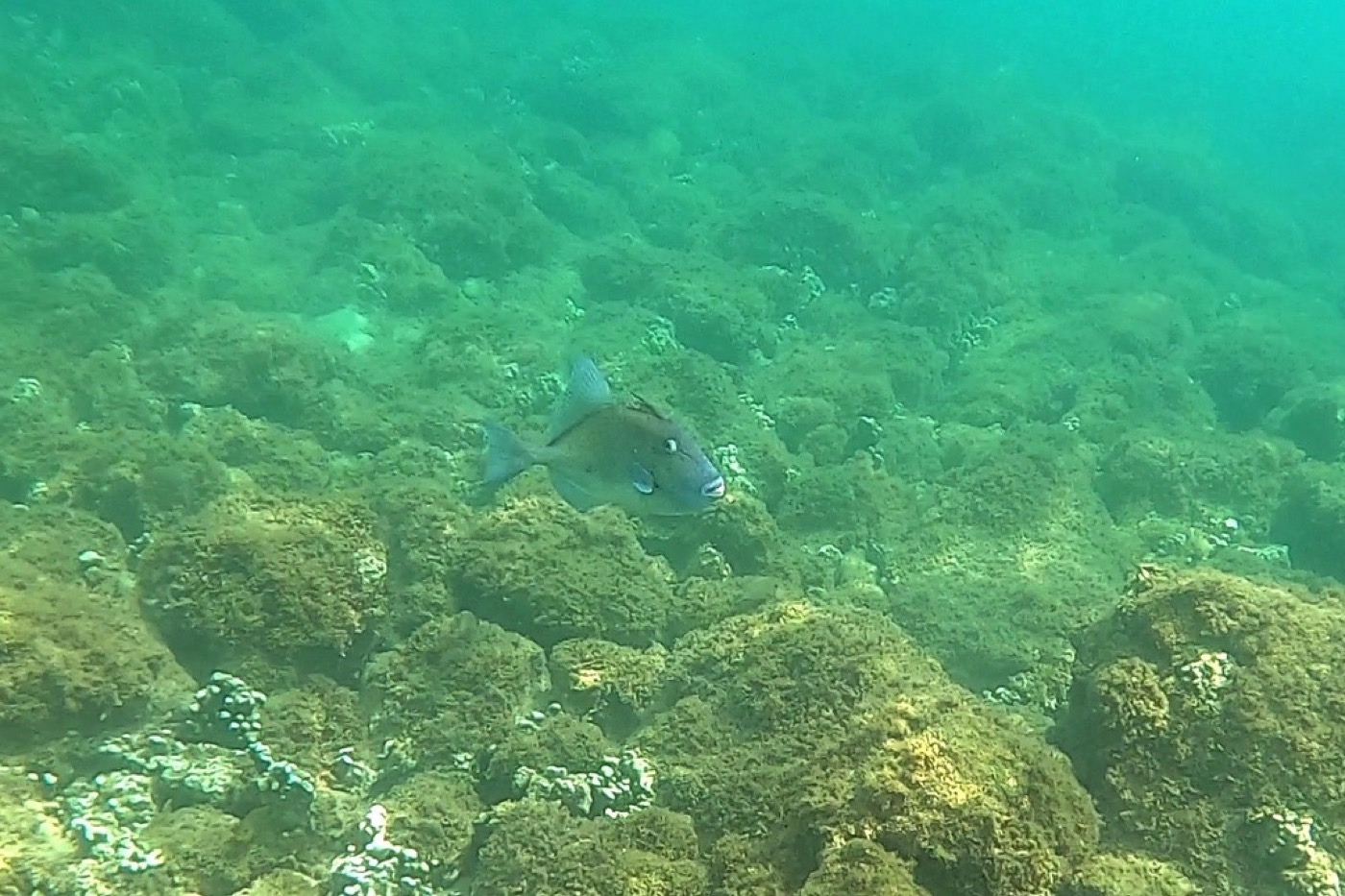
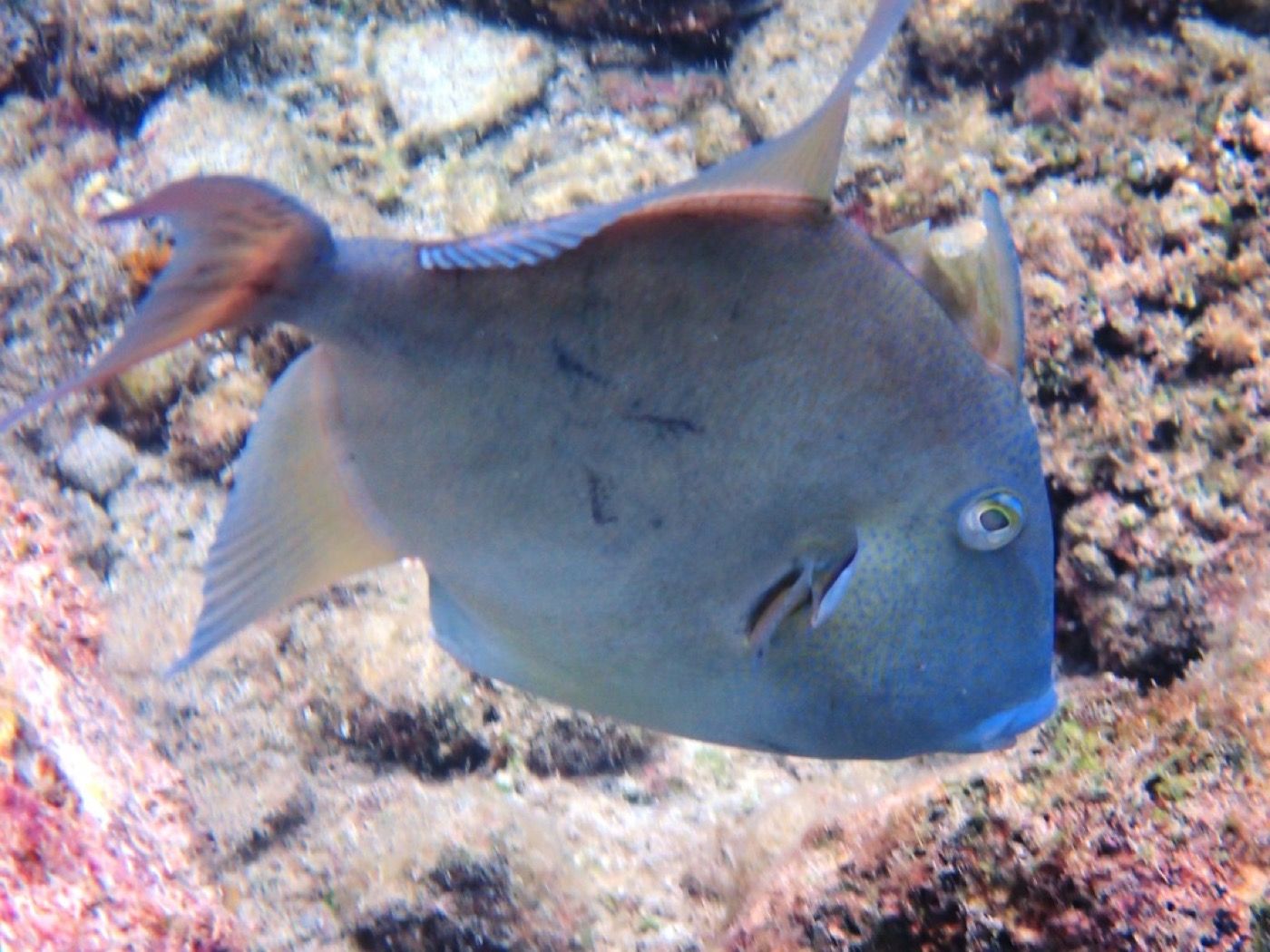
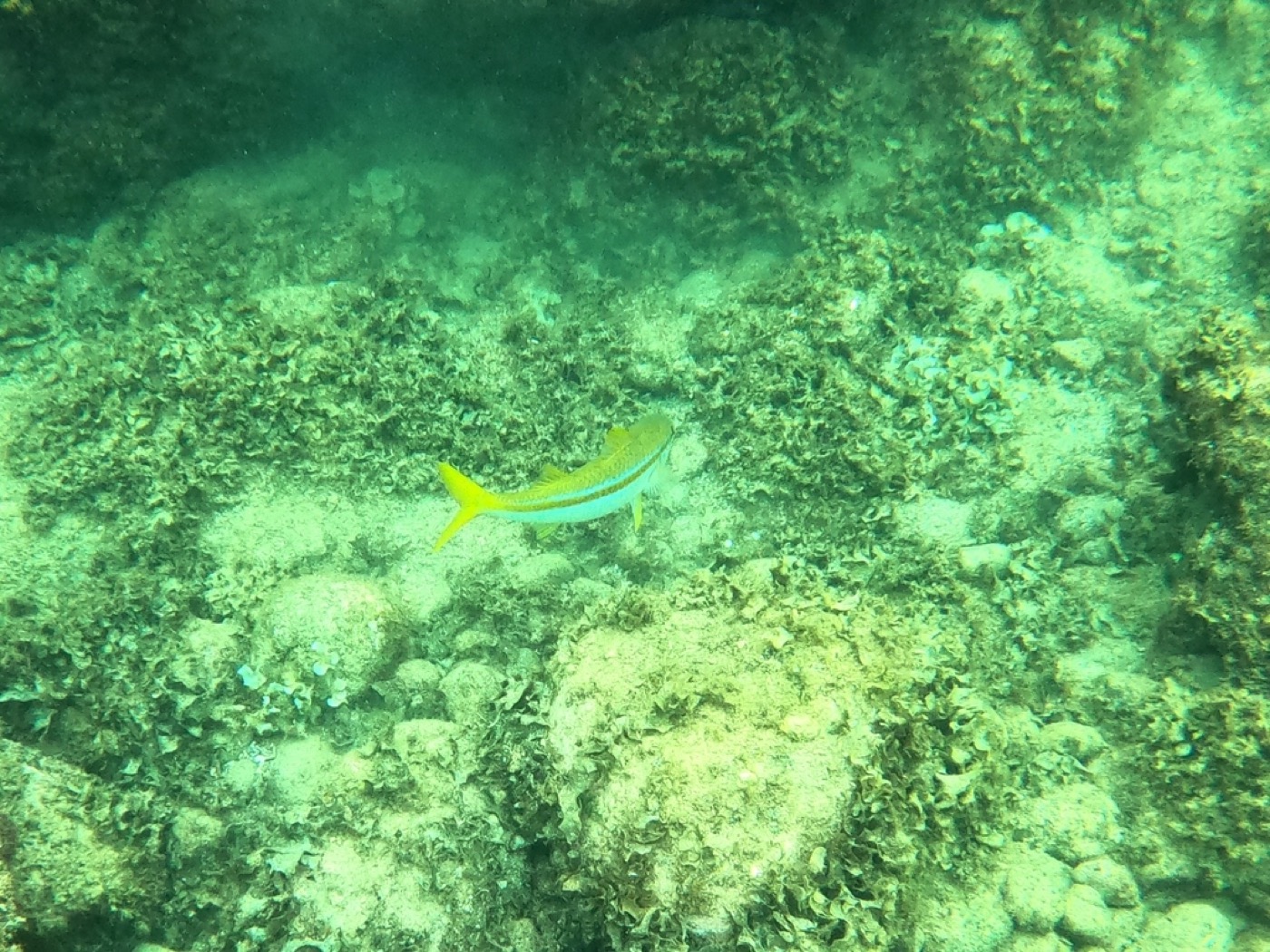
You'll see a lot of fish out there. Most of them you can ignore. If there are only a few you'll be able to identify quickly and consistently on a shore dive, make it these: grunts, the cabrilla (grouper), and the finescale triggerfish. Everything else is a bonus.
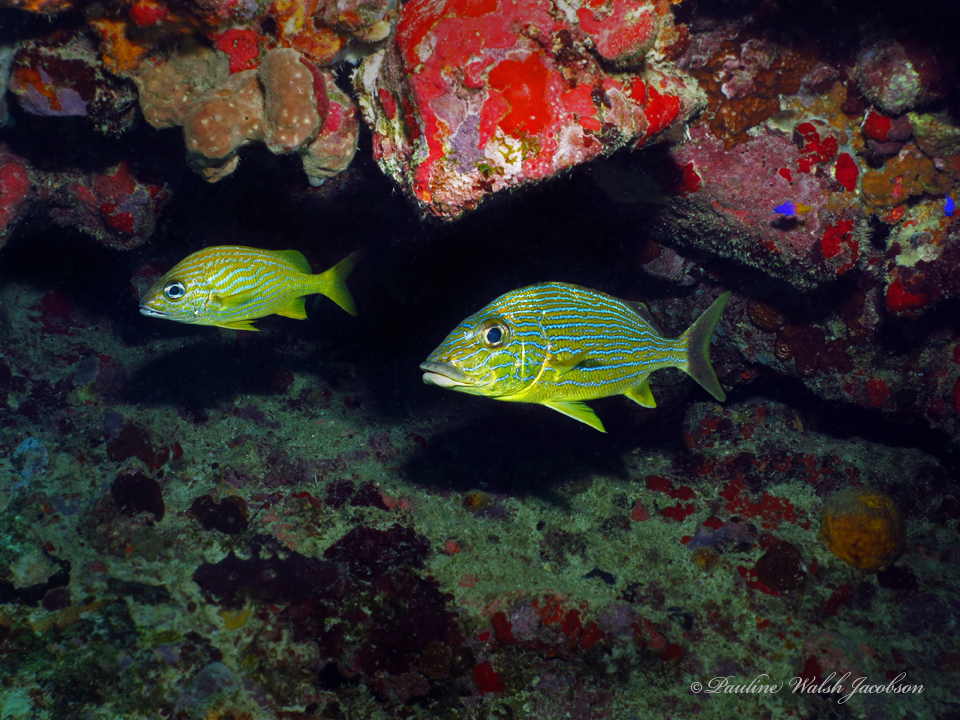
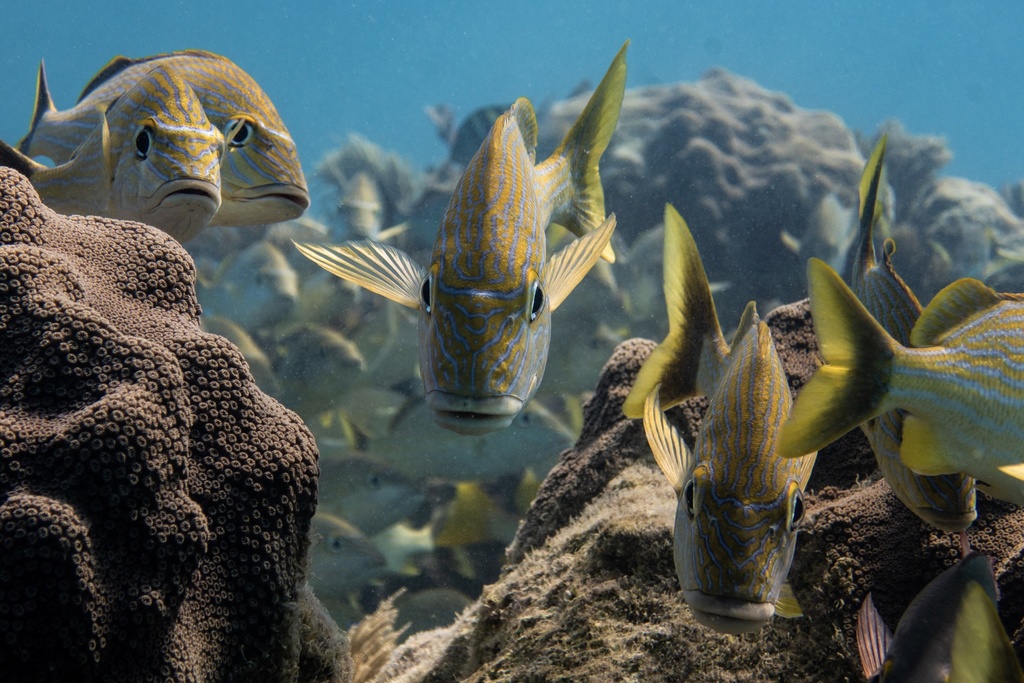
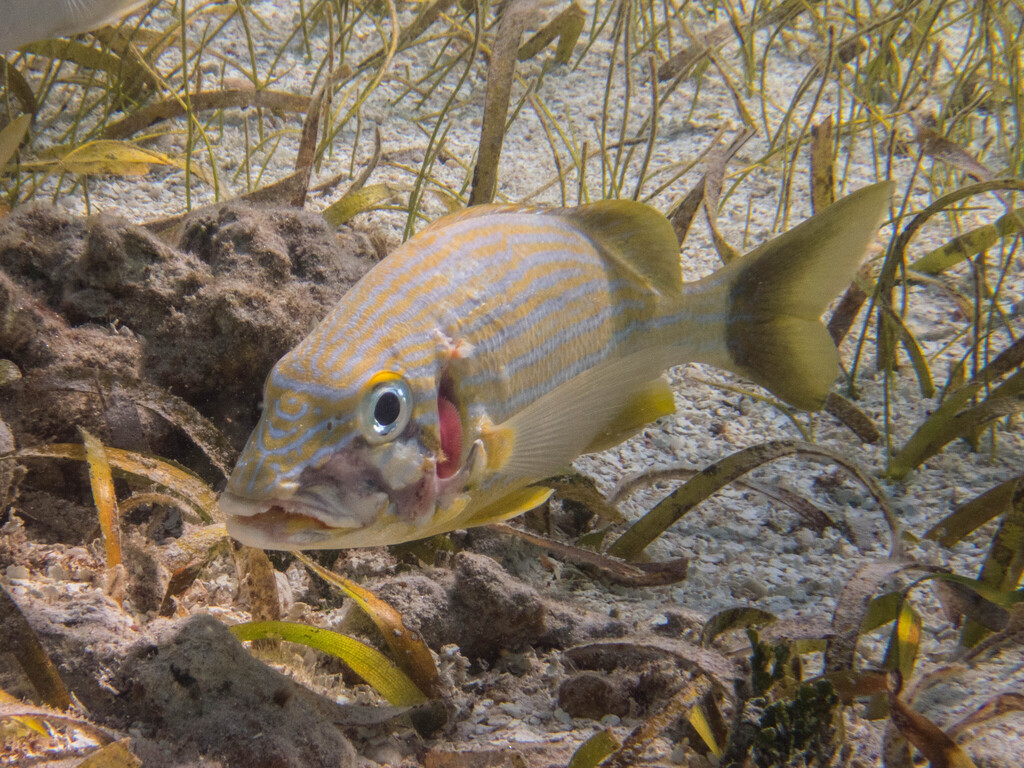
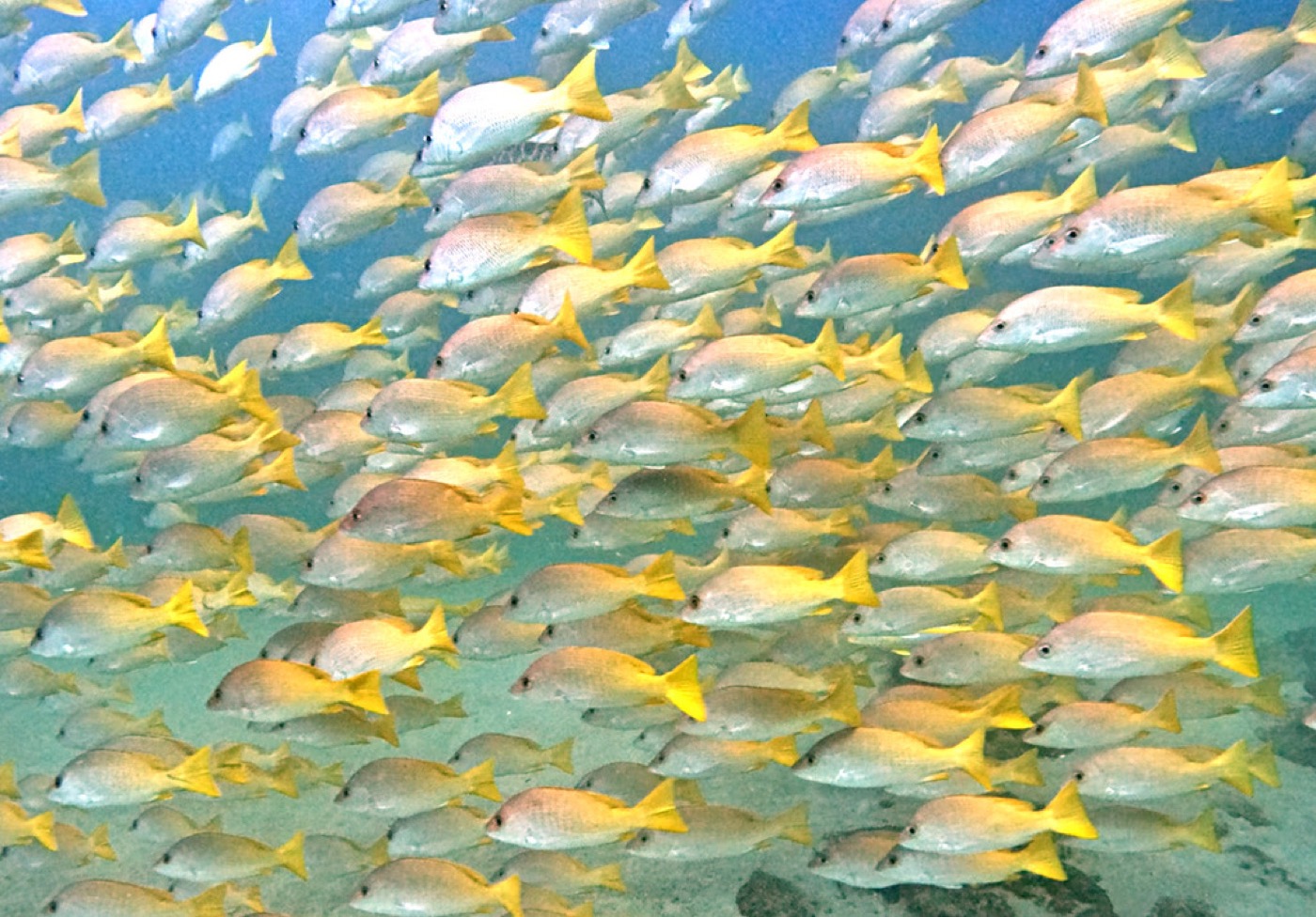
Start here. Grunts are the easiest legitimate fish to put on a stringer on a Pescadero shore dive. They school in big loose groups over and around rock structure, hanging in open water rather than hiding. You'll see fifty of them on a single drop. They're not skittish — they'll drift past you at close range.
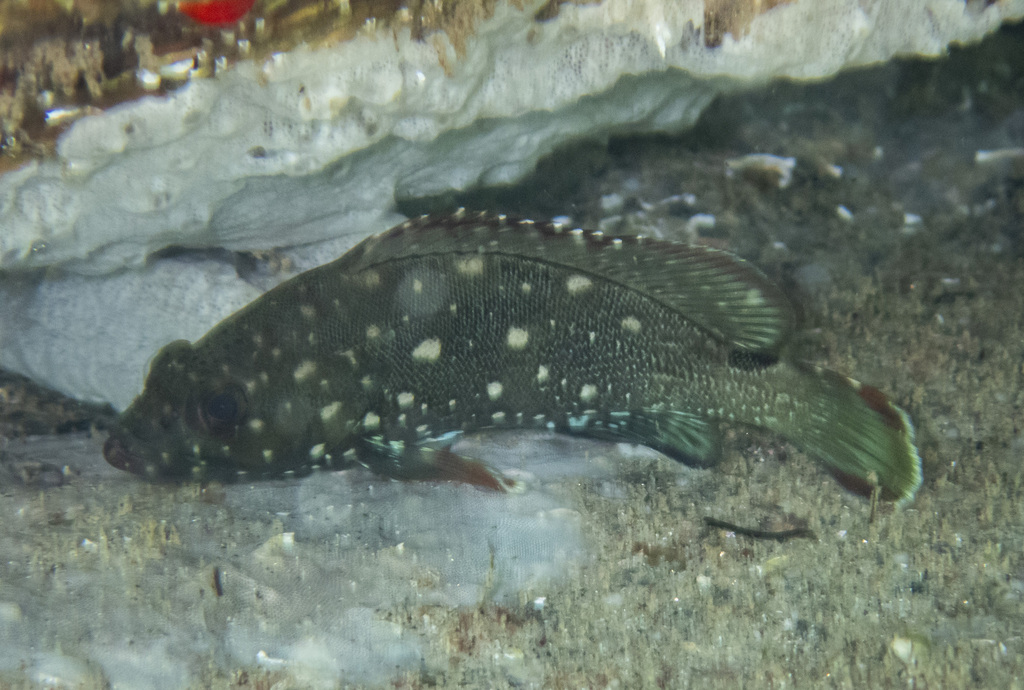
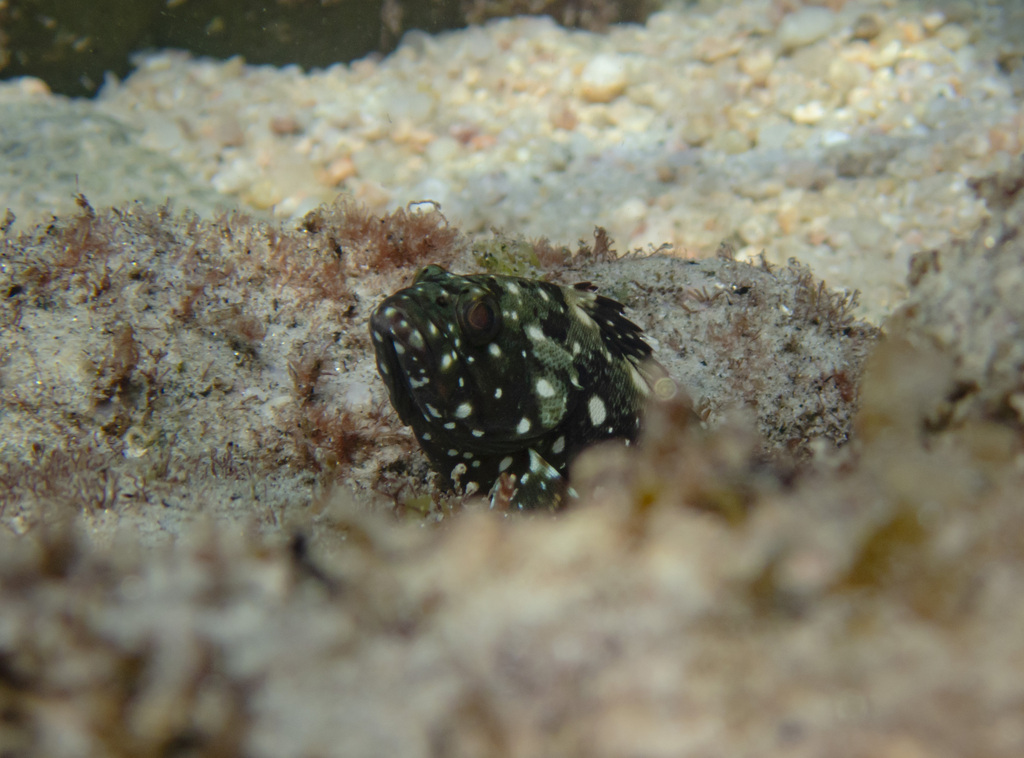
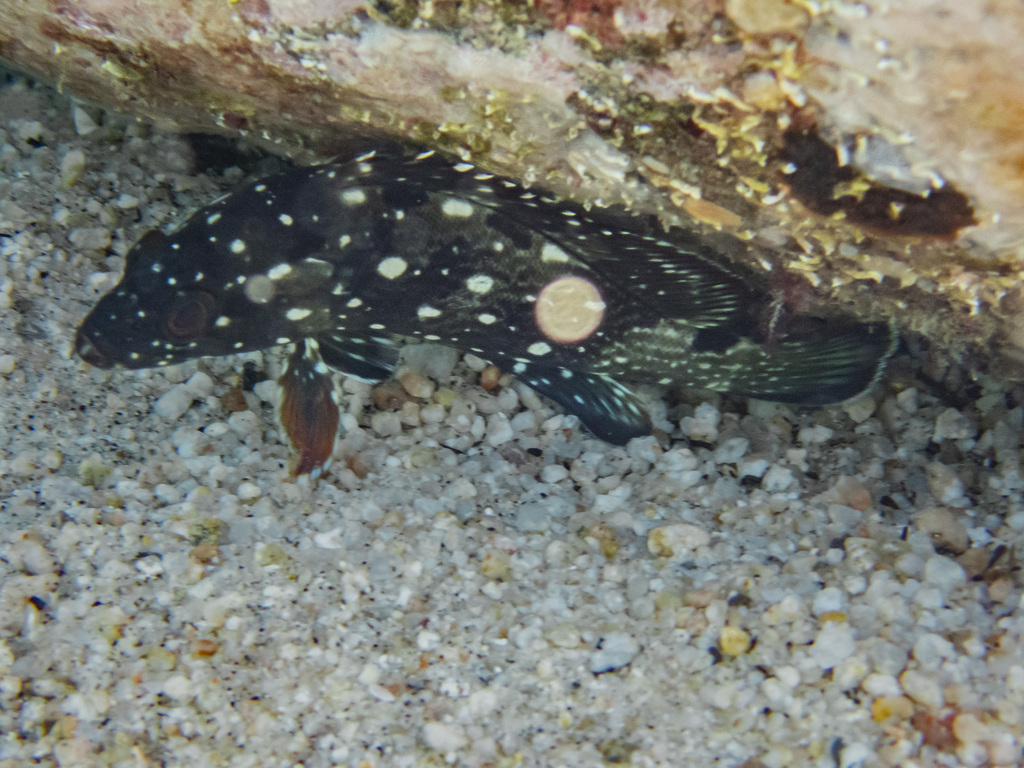
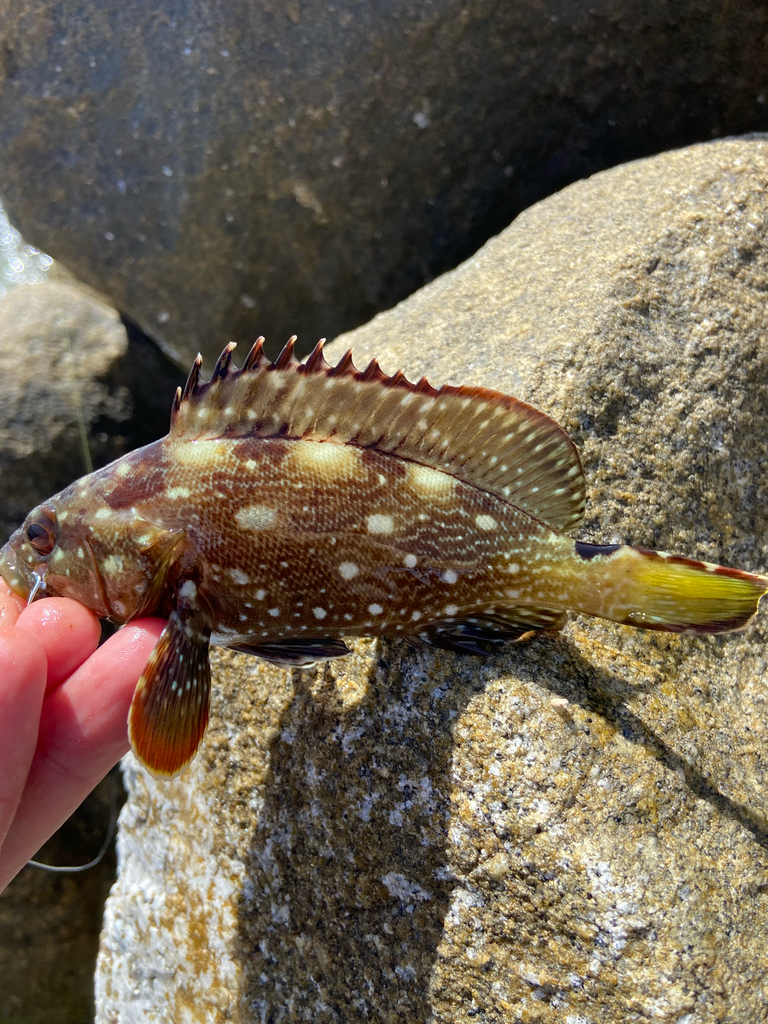
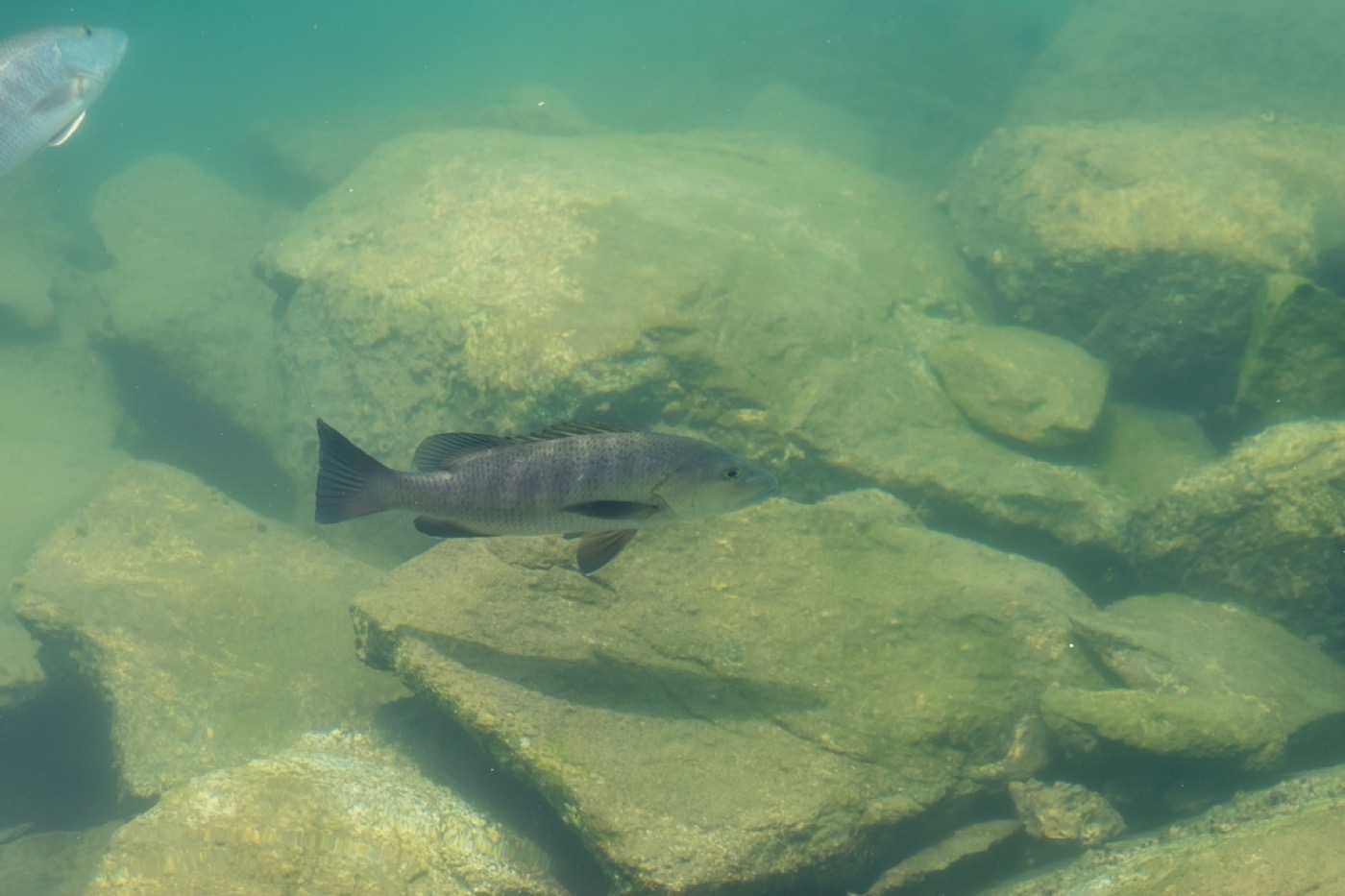
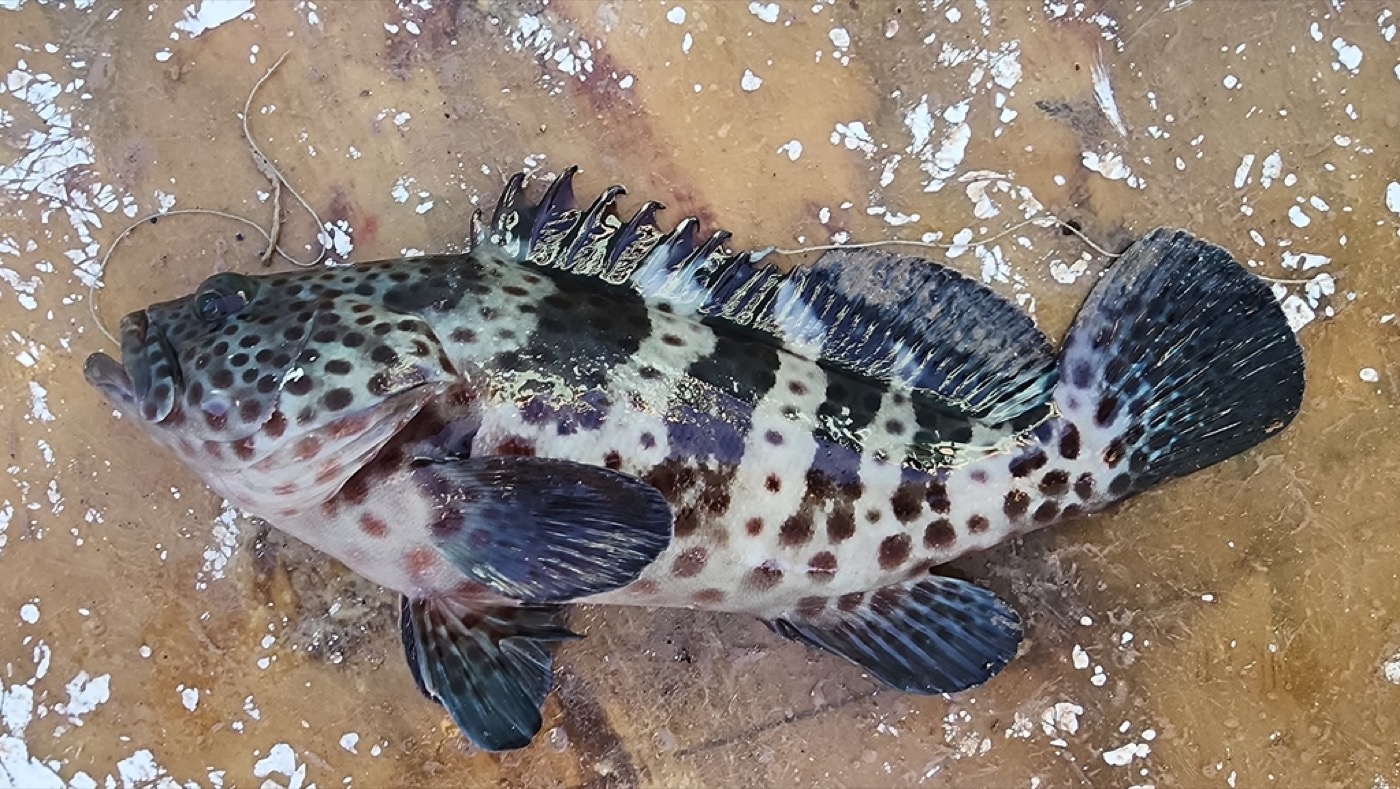
Once you've put a few grunts on the stringer, the flag cabrilla is the next step up. Unlike grunts, they're not out floating around — they live tucked inside the rocks, in ledges and boulder fields and the dark spaces between structure. You have to be a little more clever: hover quietly over a good rock pile in 10–30 ft of water, and one will usually slide out to look at you. The reward is a bigger fillet and grouper-tier white flesh.
ID: olive-brown to mottled gray body covered in fine pale spots, bright orange-red flecks across the head, and a clean white-edged tail — the "flag" the common name points to. Smaller and shallower-holding than the leopard grouper; this is the cabrilla you'll actually see on most Pescadero dives.
Eating: classic grouper flesh — dense, sweet, low-oil, forgiving on the grill. Cabrilla tacos are the regional standard. A small one is perfect whole-roasted.
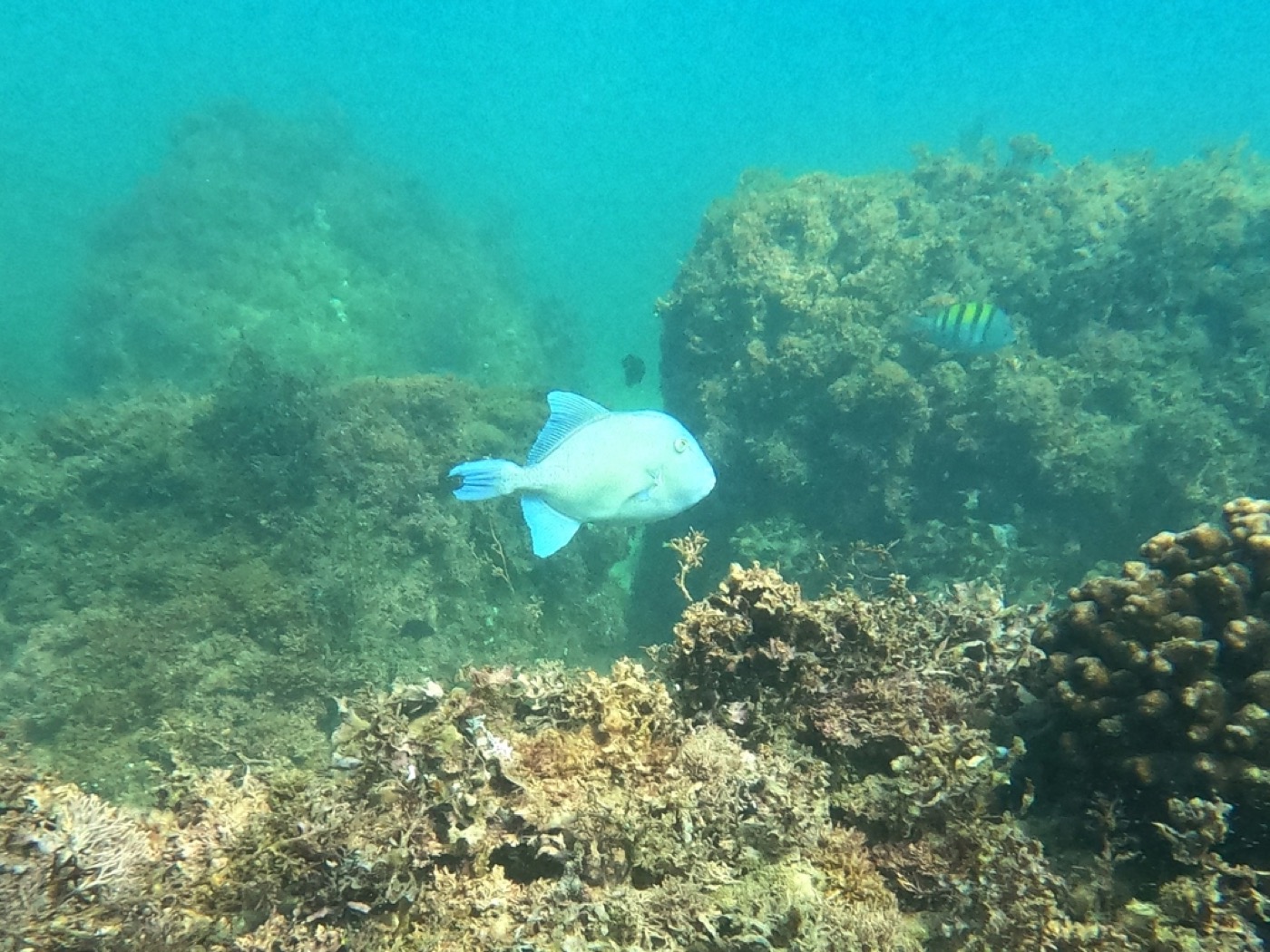
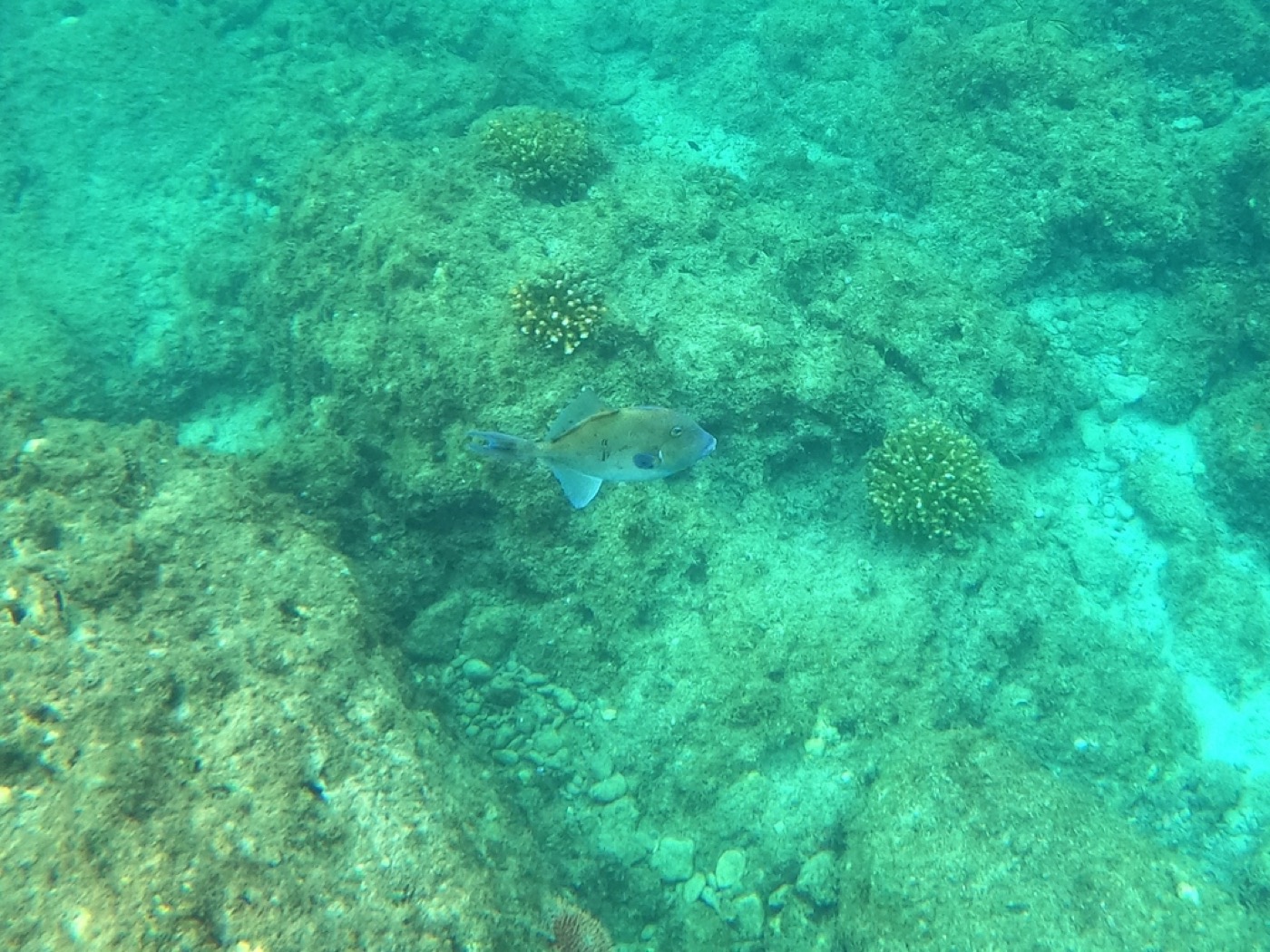
They're curious but not stupid. A triggerfish will swim over to look at you, hold position at the edge of your range, and then ease back into the structure if you press. Stay low, breathe down quietly, and let the fish close the distance. They'll often come back twice if you wait.
Eating: one of the great hidden-tier fish in the Sea of Cortez. The flesh is white, dense, sweet, almost lobster-like — locals will tell you cochi tacos beat snapper. Low oil, high yield once you get past the hide. Holds well on ice.
Shot placement matters. The hide is rubbery and the body cavity is small. A side shot through thick muscle can pull free. Aim for the head — just behind the eye — or the softer belly directly behind the pectoral fin. Avoid the dorsal spine area; you'll bend a shaft before you anchor the fish.
Every fish you'll see on a shore dive falls into one of three buckets: opportunistic targets (legal, edible, shoot if you see them), skip (legal but not worth a shaft), or off-limits (illegal, toxic, or ethically protected). The fish below are the ones you'll cross paths with often enough to know on sight.
Illegal under Mexican federal regulation, toxic, or ethically off-limits in the global spearfishing community. Recognize them on sight so you don't waste a stalk — and don't put yourself one bad decision away from a fine or a vet visit.

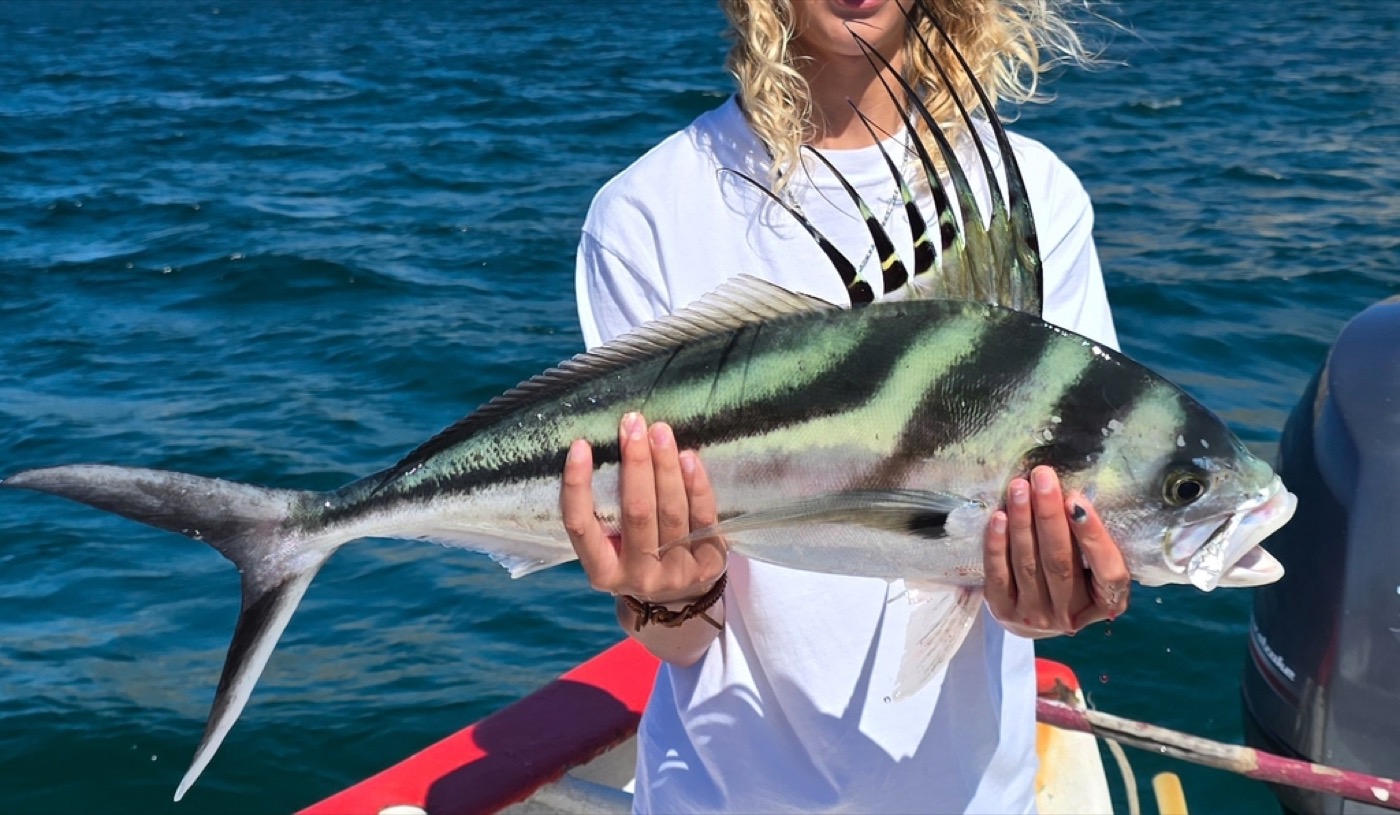
Iconic East Cape gamefish — unmistakable seven-spined "rooster comb" dorsal that fans up when excited. You will see them cruising the surf in shallow water. Illegal to spear in Mexico (catch-and-release sport fish only). Poor eating regardless.
Illegal · Protected
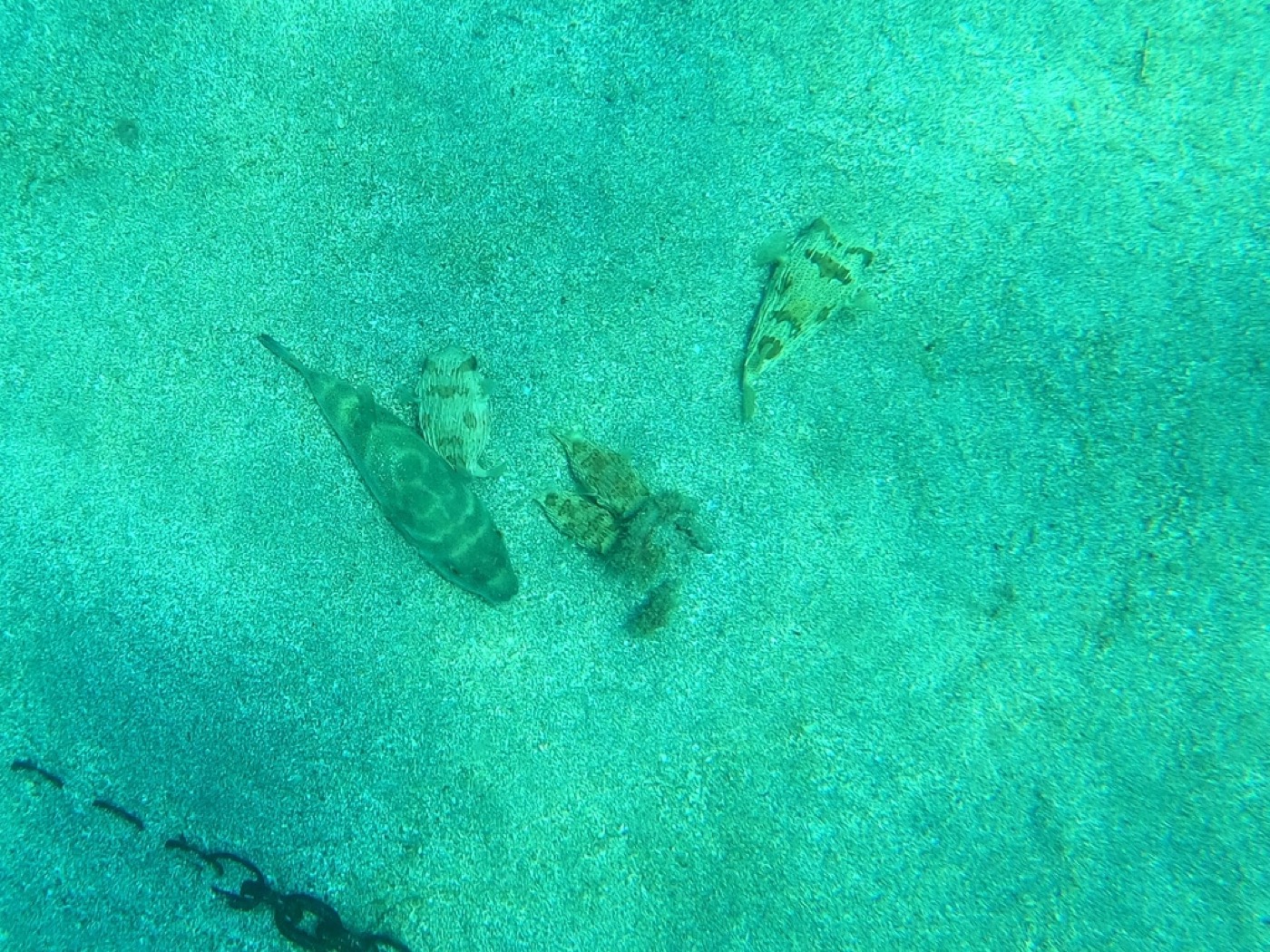
Toxic. Will inflate if approached. Common in shallow sand-and-rock areas. Easy to identify by the polka-dot pattern and the cartoonish shape. Don't shoot. Don't touch. Even handling the fish can be hazardous.
Toxic · Don't shoot
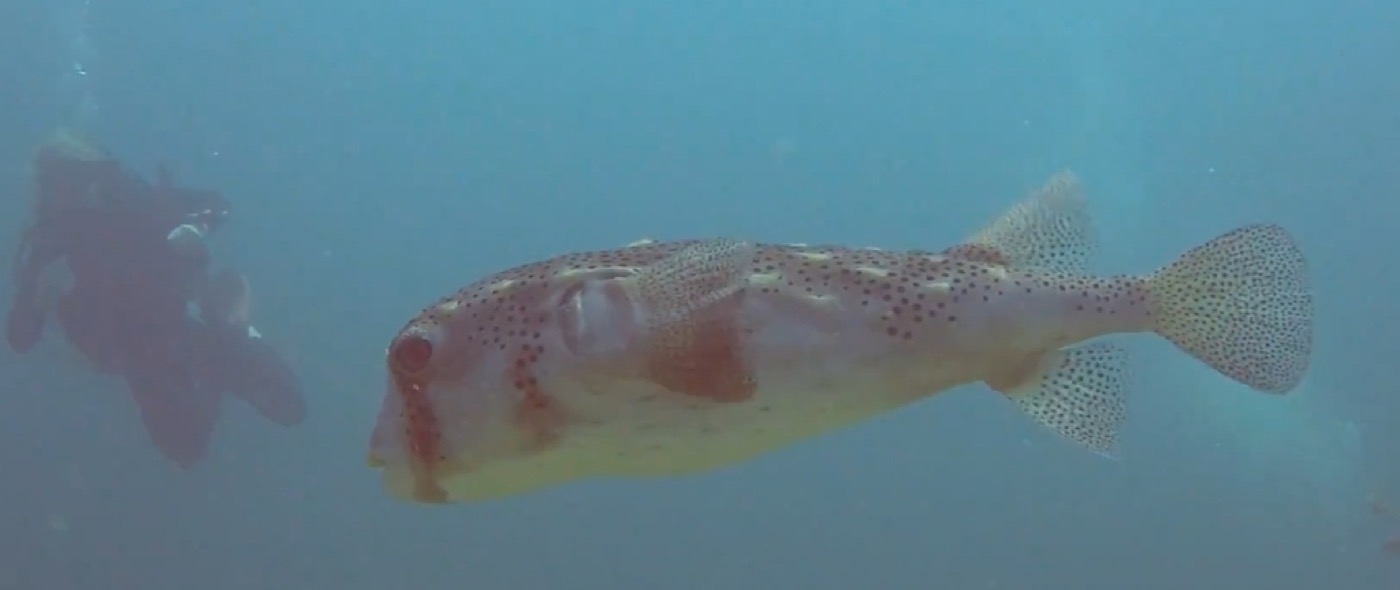
Football-shaped, covered in distinct dark spots, blunt face, short fins. Porcupinefish family — same toxin concerns as puffers. Slow and easy to approach, which makes shooting them feel cheap. Don't.
Toxic family · Don't shoot
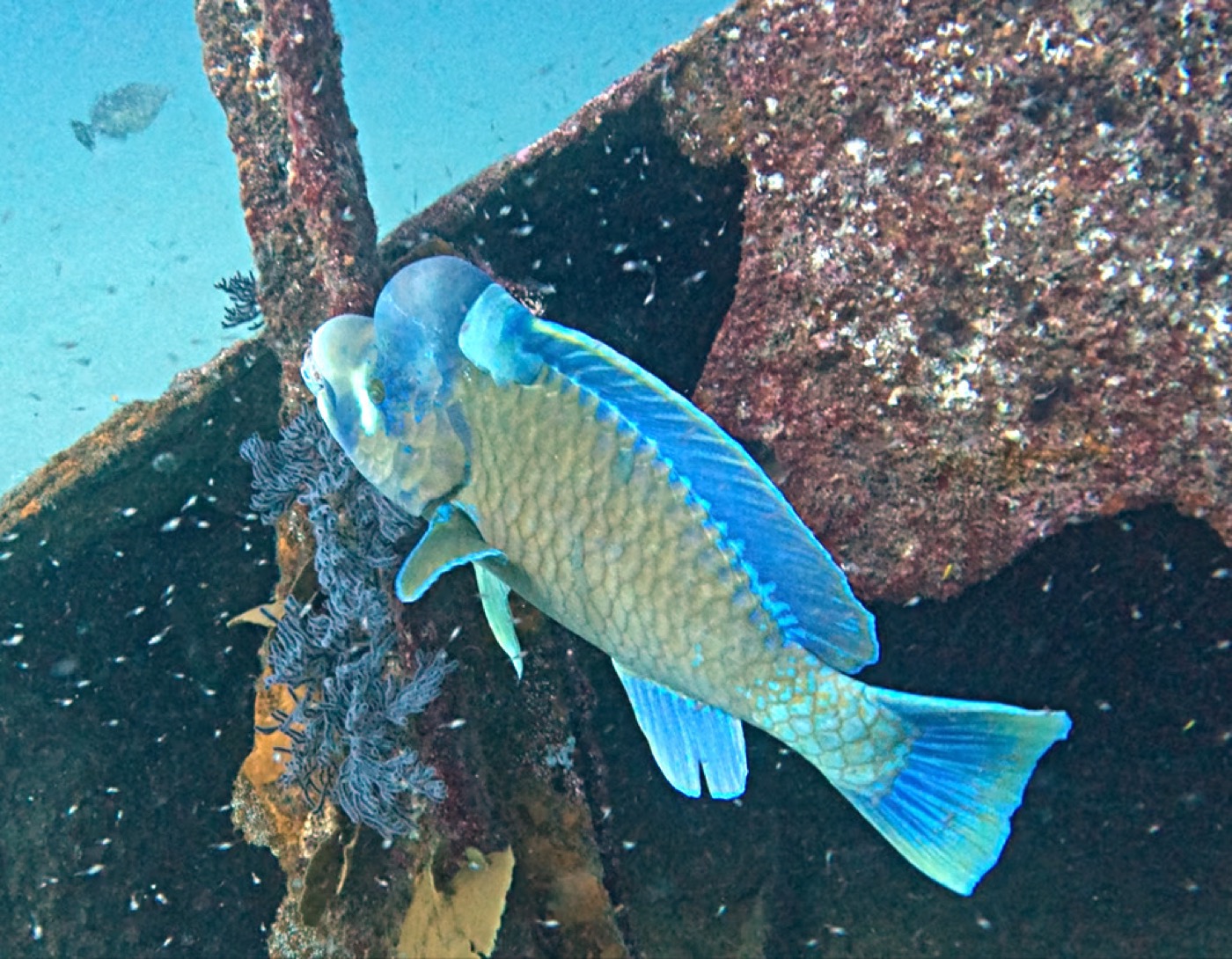
The common Sea-of-Cortez parrotfish. Large, blue-green, pronounced forehead bulge in terminal males. Not federally protected in Mexico — legally you can shoot one. But parrotfish are keystone reef grazers that produce the white sand. Eating is mediocre. The global spearfishing ethic is to leave them alone.
Ethics · Don't shootEither too small to bother with or the flesh isn't worth carrying back up the beach. Useful to know on sight so you don't waste a stalk on one.

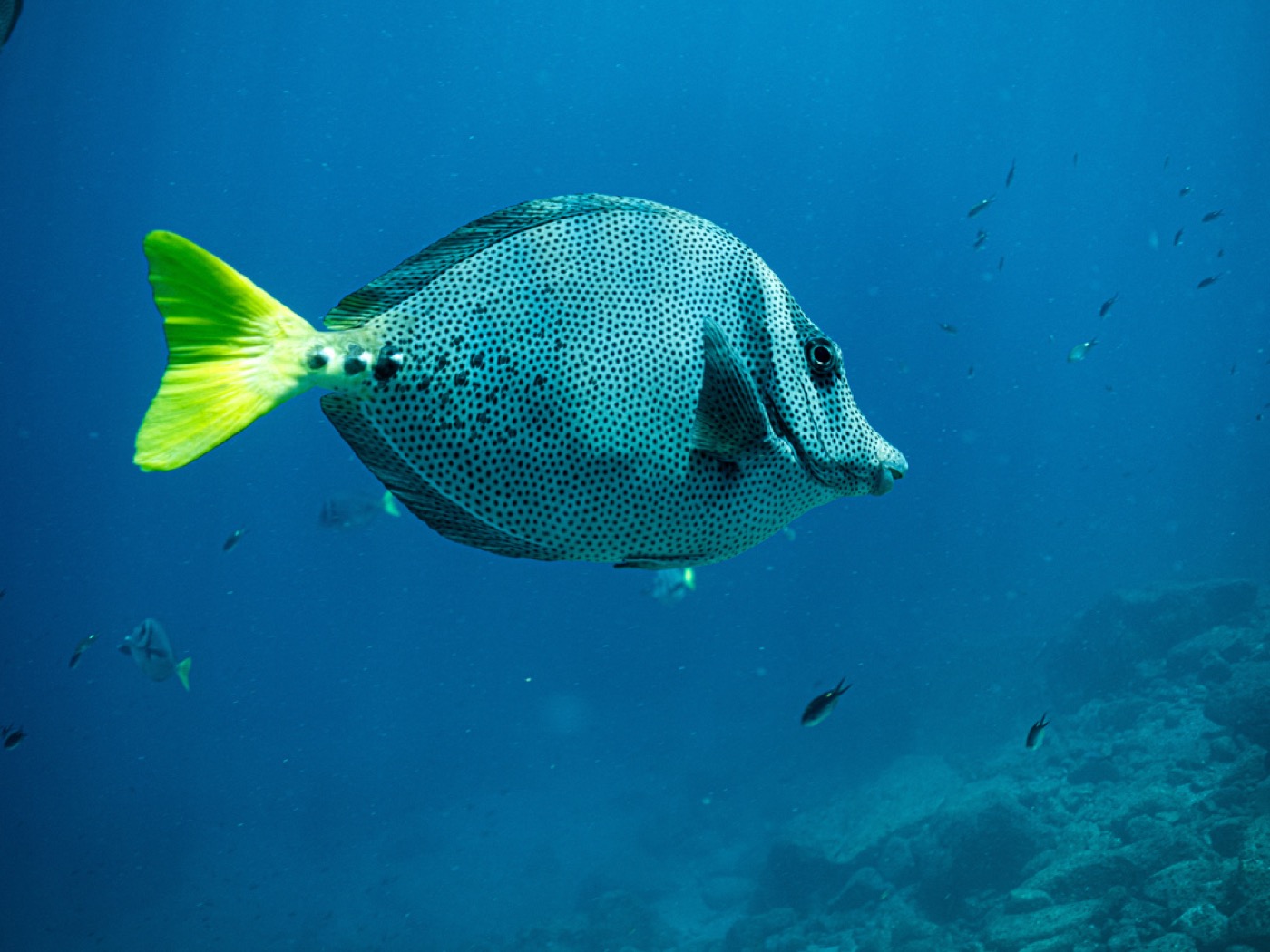
You'll see a lot of these. Slate-gray body covered in small darker spots, bright yellow tail — schools around rocks in 15–40 ft, often in big drifting groups that fill the water column. The common Sea-of-Cortez form (P. punctatus); the unspotted P. laticlavius runs further south. 10–18 in. Not good eating — flesh is dark, strong, and oily; doesn't reward the carry off the beach. Watch the small scalpel-sharp spines at the base of the tail if you ever handle one. Learn the shape so you don't waste a stalk.
Skip · Common but poor eating
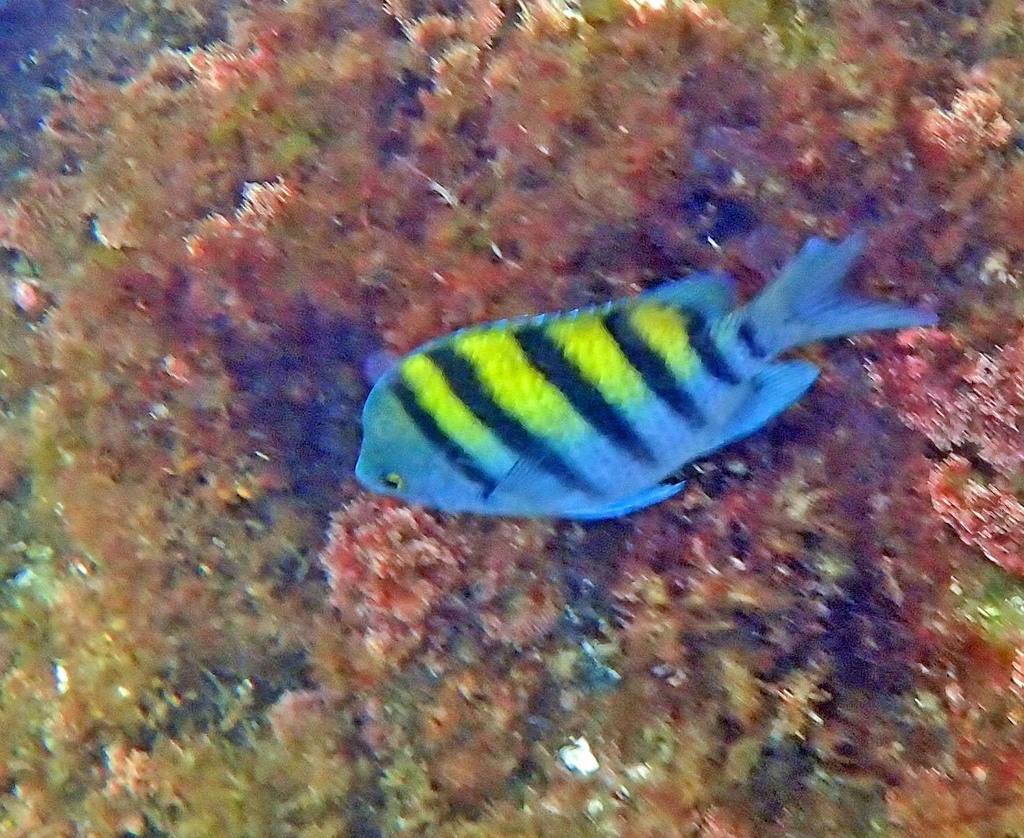
Common damselfish, 4–6 in, yellow upper body with five vertical black bars on silver. You'll see them everywhere. Too small to bother with. Useful indicator — sergeant majors thriving means a healthy structure.
Skip · Too small
Silver body with a distinct yellow lateral stripe and two chin barbels for bottom-feeding. Schools over sand and sand-rock edges in 10–40 ft. 10–14 in. Edible but soft-fleshed and rarely targeted — small fillet yield, mild flavor.
Skip · Mediocre eating
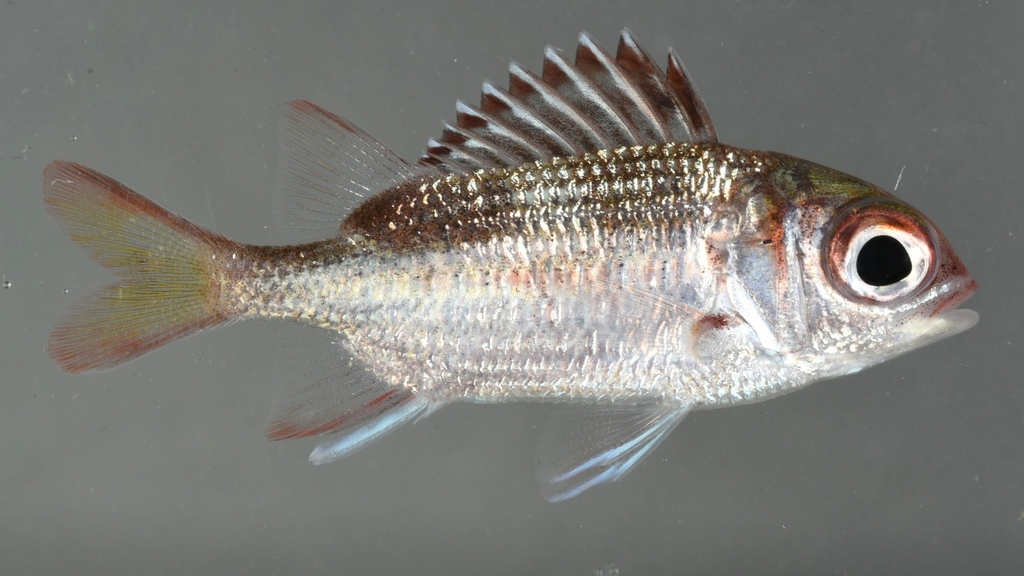
Bright red-orange body with large eyes, tucked under ledges and inside small caves in 15–40 ft. Often called a squirrelfish. Pass on shooting them — the fillets are tiny and the scales are dense, armored, and miserable to clean. The work-to-meat ratio isn't there. Pretty fish to leave alone.
Skip · Tiny fillet, armored scalesLegal, edible, ethically clean. Some are bonus-class trophies you'll be lucky to encounter; others are reliable secondary targets when the main three aren't producing.

The big cousin of the pargo. Brown-bronze, gnarly canines, holds in deep cuts and caves. Possible from shore but usually means you've found a serious rock structure. Same family-tier eating as yellow snapper. A 20-pounder is a trip-defining fish.
Bonus · Trophy class
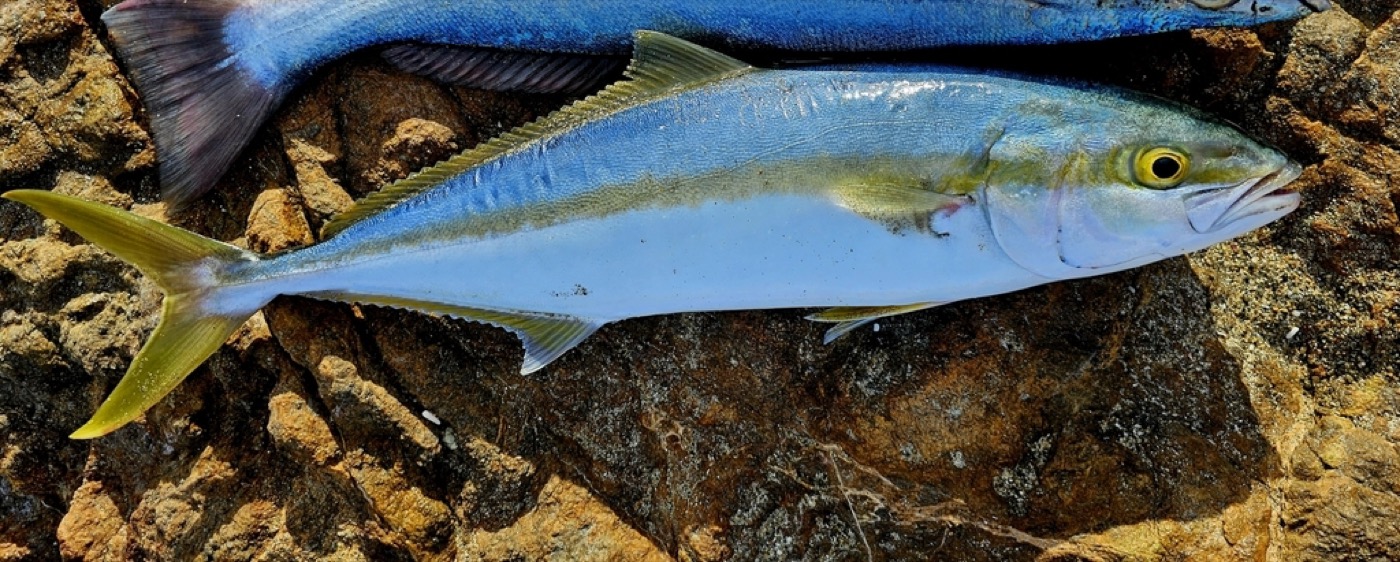
The jackpot of inshore Baja. Olive-yellow back, silver sides, brilliant yellow tail. Mostly a winter visitor close to shore; usually you need a boat. If one cruises through — that's your fish. Among the best-eating fish in the Pacific.
Bonus · 5/5 eating
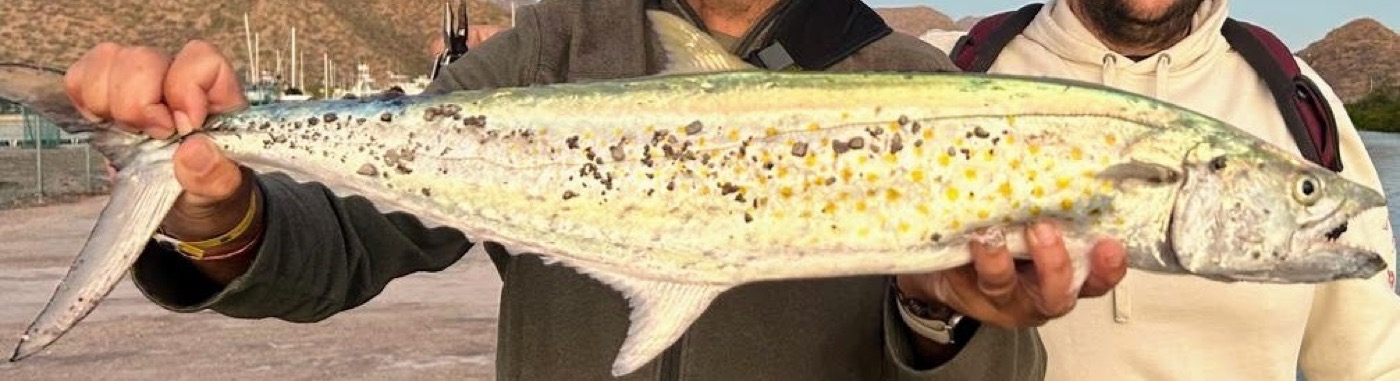
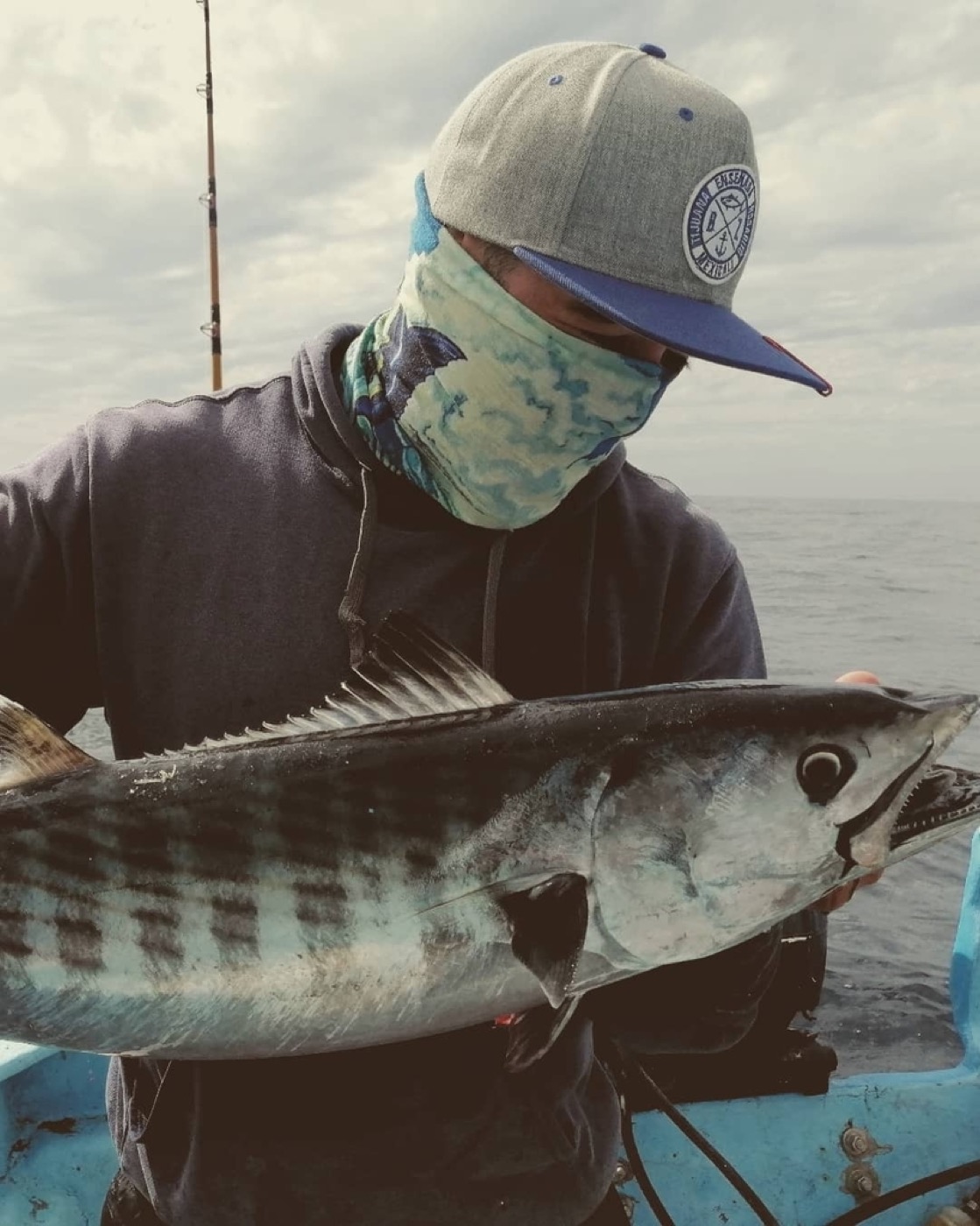
Silvery torpedo with round orange-yellow spots and a jet-black first dorsal. Pelagic schoolers that patrol the surf zone — fast, skittish, peak in winter/spring. Look surface-up for bait boils. Pink, oily flesh — best as ceviche, smoked, or grilled hot within 24 hours.
Bonus · Seasonal pelagic
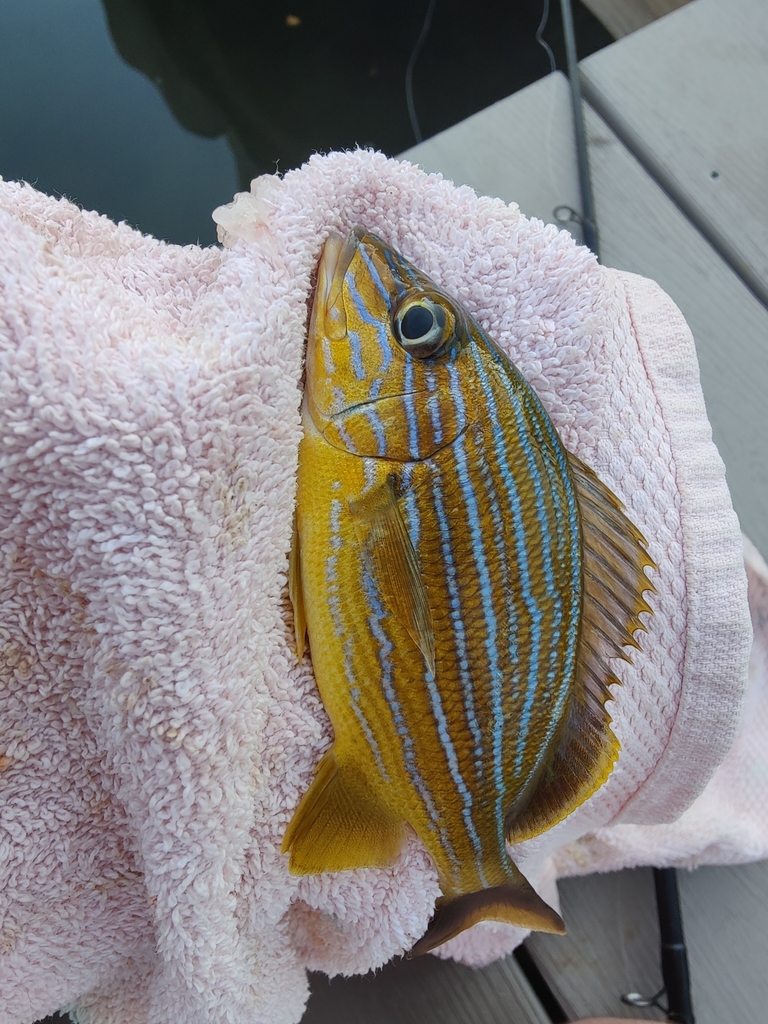
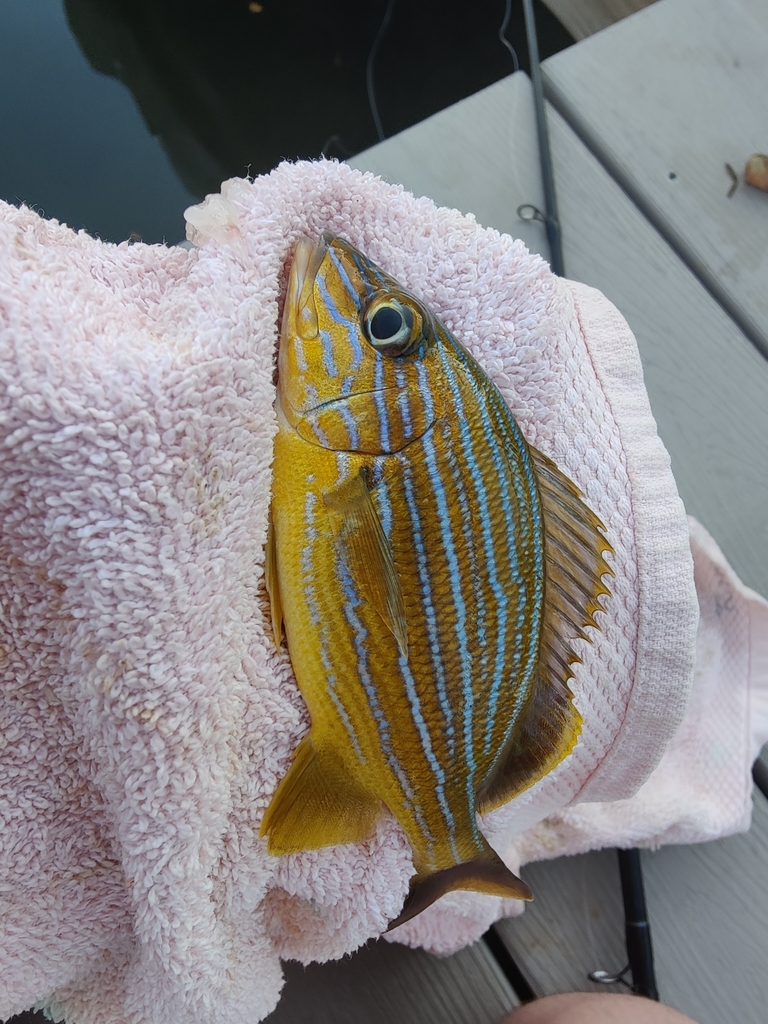
The "yellow snapper." Easy to confuse with grunts at a glance — but a real pargo is larger, stockier, with a more saturated yellow back and a thin blue streak below the eye (fades fast out of water). Holds rock-sand edges in small loose groups of 3–8. Wary; you have to be still and let them swing through. Excellent eating — the famous pargo a la talla.
Shoot · Excellent eating
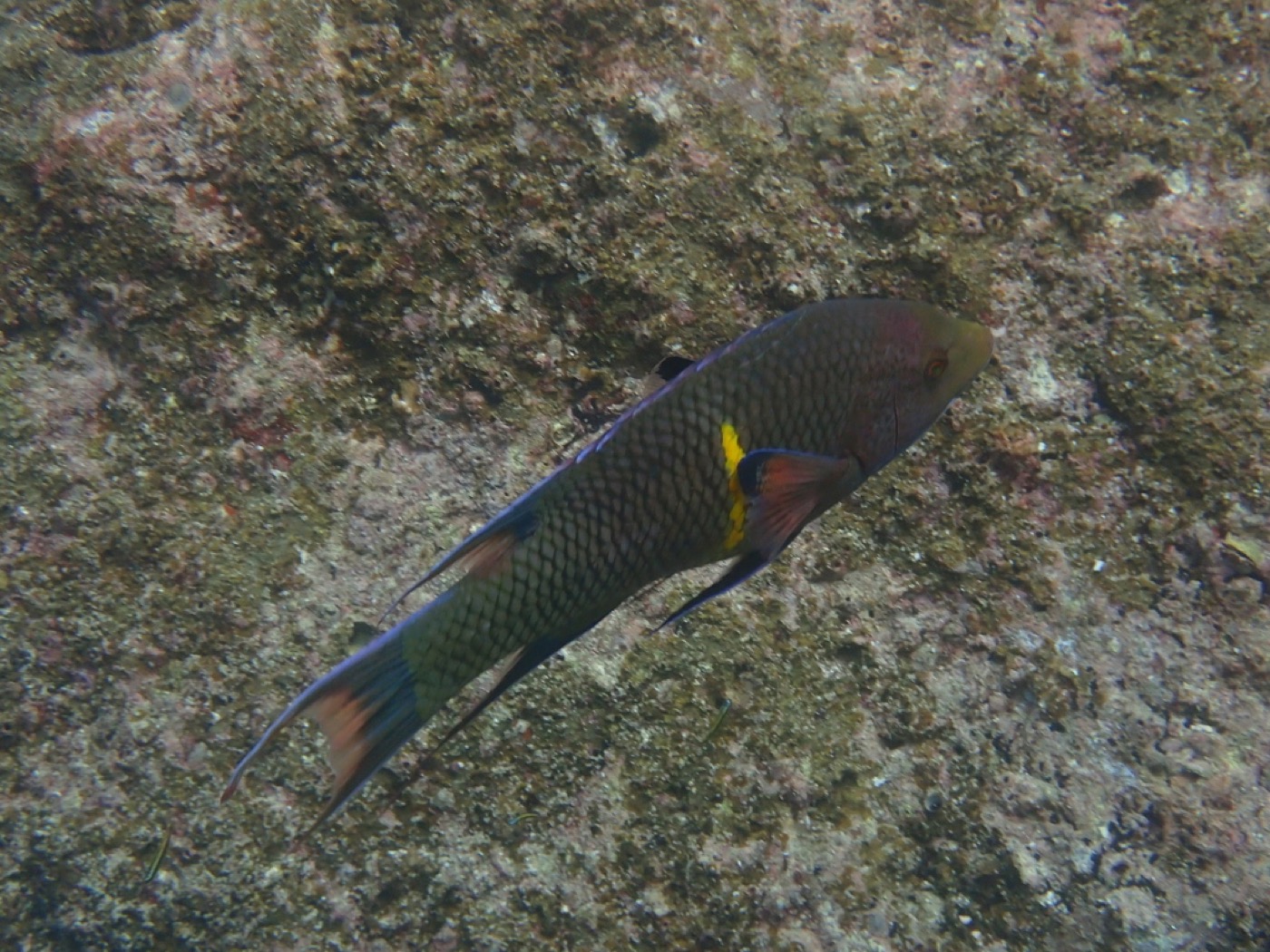
Big-headed wrasse, common in 15–40 ft over rock. Females / juveniles: yellow-pink mottled with dark blotches. Terminal males (pictured): green-blue body, prominent forehead hump, pink-purple flanks. 10–18 in typical. Excellent eating — white, sweet, snapper-tier flesh.
Shoot · Excellent eating
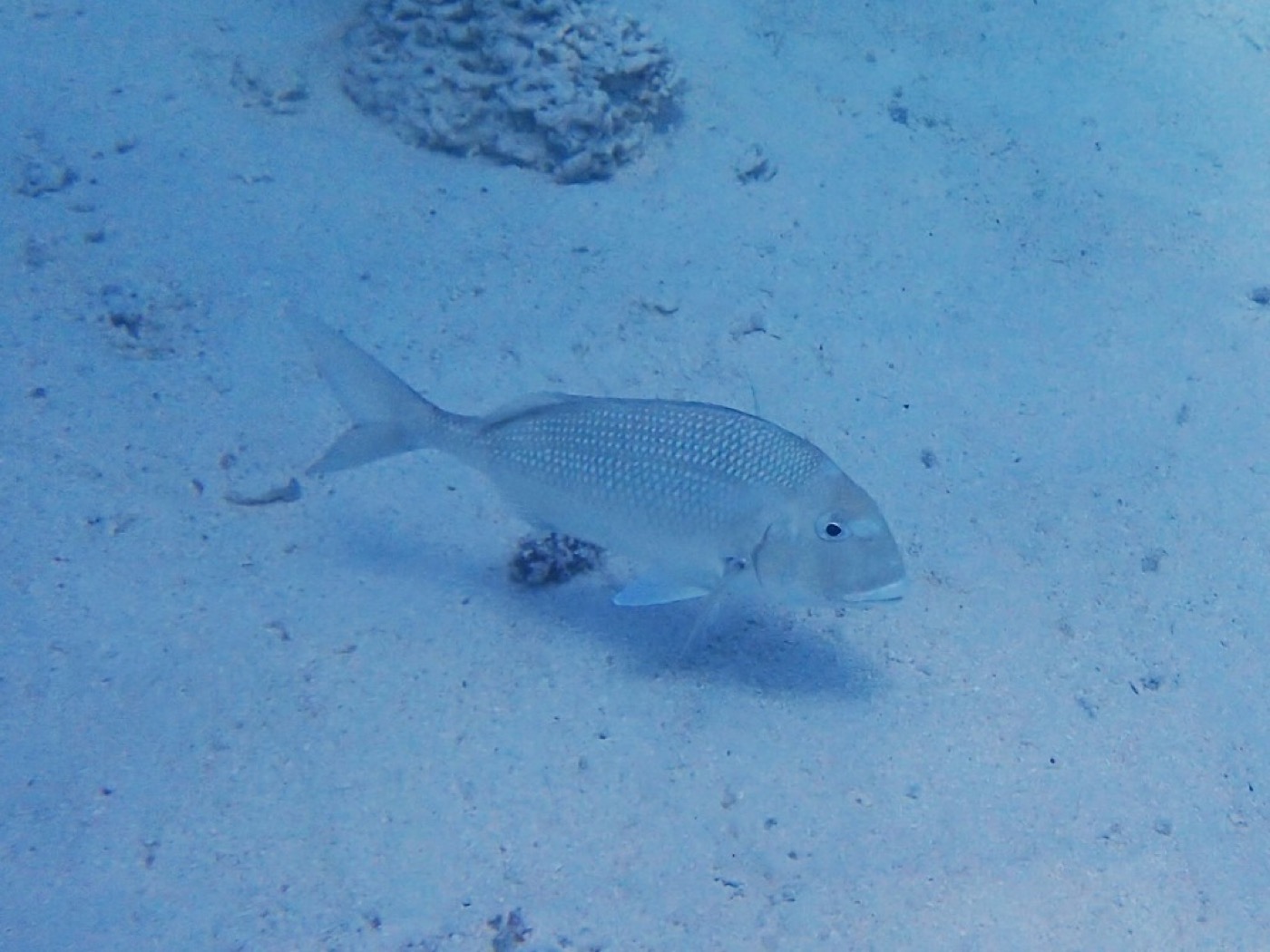
Deep-bodied and compressed with a pointed snout, silver-bronze with irregular gray-brown blotches. Holds over sand-rock edges in 10–40 ft. 10–16 in. Excellent mild white flesh, takes well to whole-roasting. Locally pluma marotilla. Likely match for your "snout, slightly flat, spotted" fish.
Shoot · Excellent eating
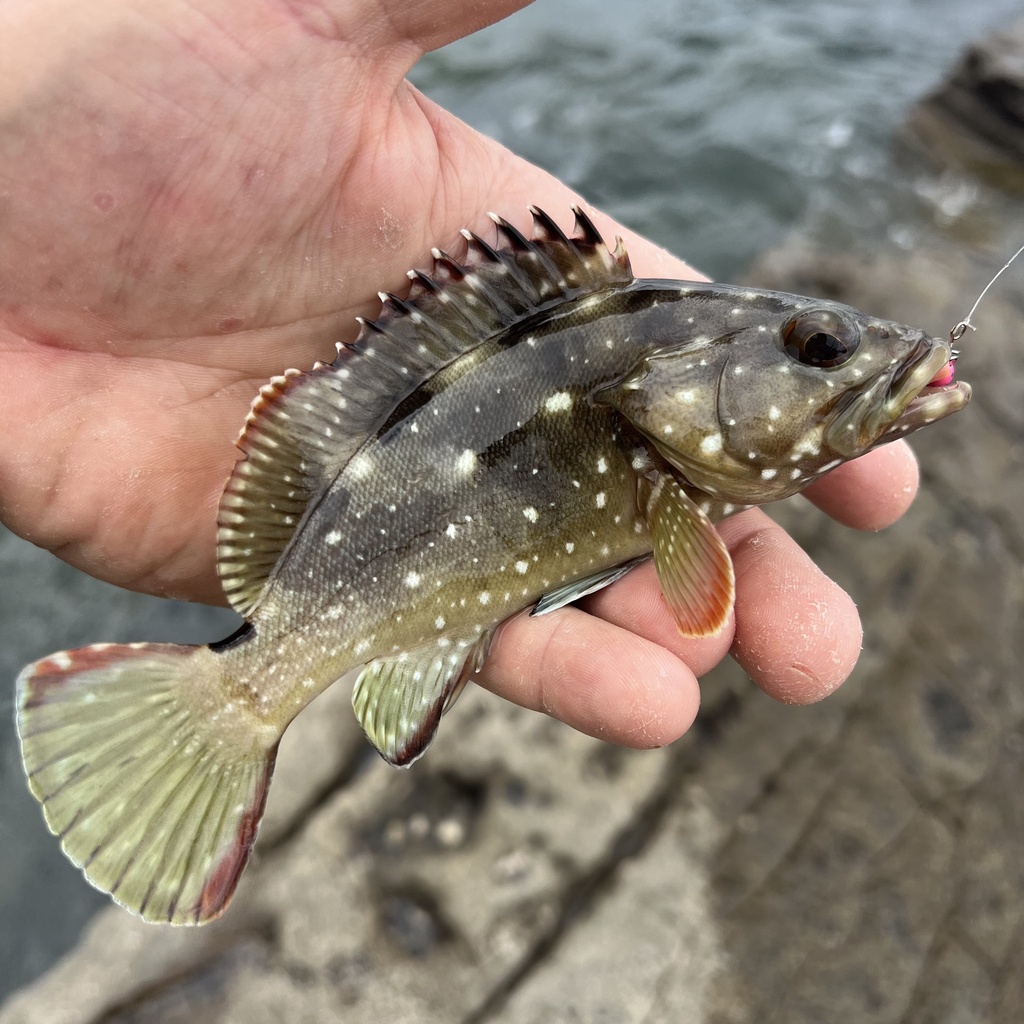
A second grouper alongside the flag cabrilla. Gray-brown body covered in small darker spots, moderate snout, deep-bodied. Holds in rocks and ledges in 15–60 ft. 10–24 in. Excellent eating — same family-tier as your primary cabrilla. Common from shore.
Shoot · Excellent eating
Cousin of the tuna, smaller, striped along the back. Schools the same water as sierra. Stronger-flavored than sierra — best as ceviche or smoked, not great grilled fresh. A solid backup target if sierra aren't on.
Shoot · OK eating
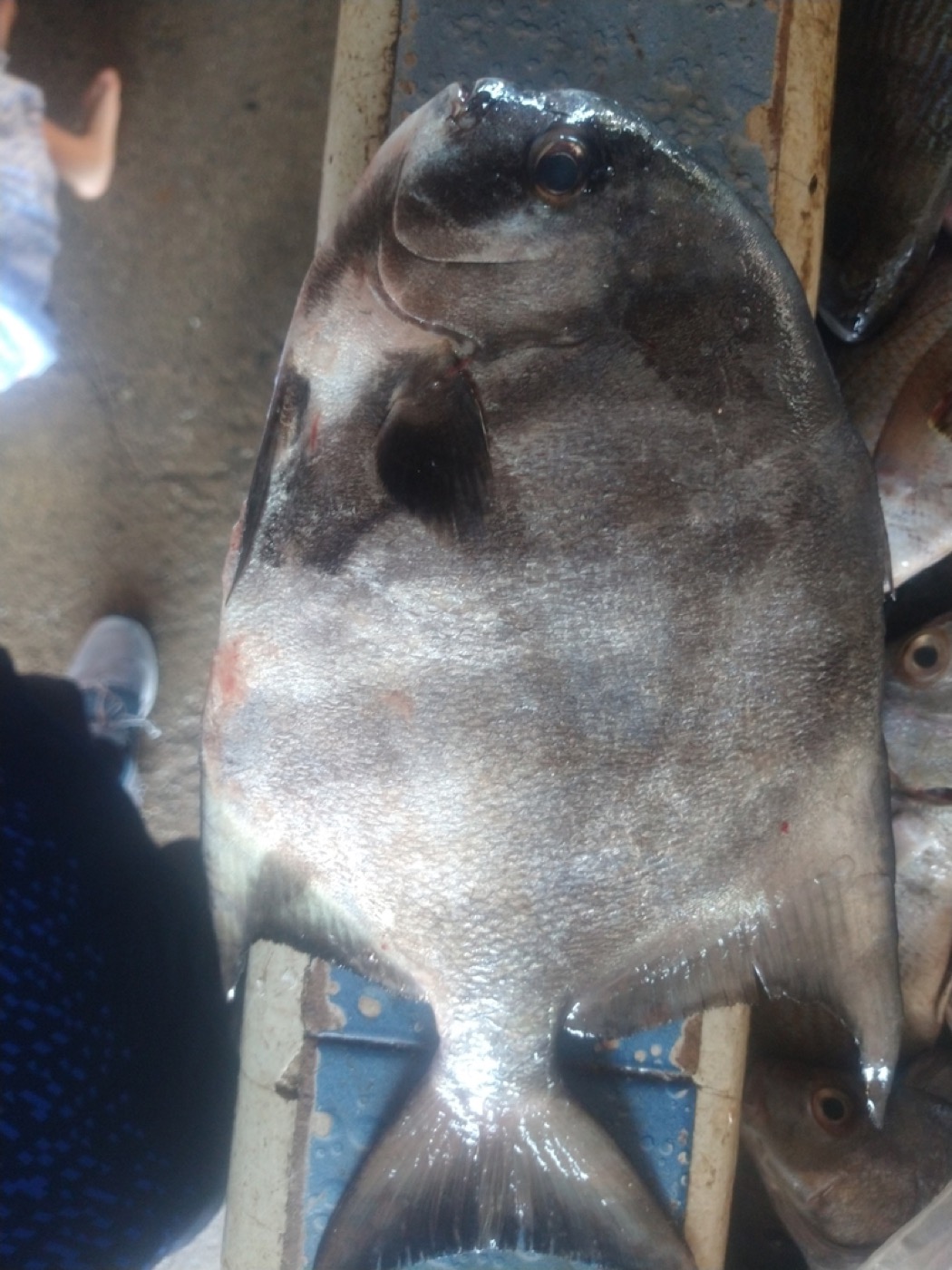
Disc-shaped, very tall and compressed body. Silver-gray with vertical dark bars in adults that fade with age. Schools around reefs in 10–40 ft. 12–24 in. Edible — white flesh, slightly dry, best grilled with fat than fried. A respectable target on a slow day.
Shoot · Decent eating